Blog
India Is Getting Snatched: Why Shapewear Is The Hottest Fashion Layer Right Now | Fashion News


Last Updated:
Moving away from the ‘medical’ look of legacy brands, the new age of ‘shapewear’ is breathable, inclusive, and, dare we say, cool.




India Is Getting Snatched: Why Shapewear Is The Hottest Fashion Layer Right Now. (AI-generated image)
When I wanted to wear a figure-hugging gown for my cocktail ceremony, I didn’t really need two bridesmaids and a prayer to zip up my ‘corset’. But the ‘breathable’ secret that I was wearing under the floor-sweeping dress to hide my bulging stomach was anything but comfortable.
In fact, if you look closely at the guest list of the last big fat Indian wedding you attended, half the women in floor-sweeping lehengas and “glass-skin” gowns were likely wearing a high-tech, breathable shapewear underneath. Much better than the one I opted for years ago.
Shapewear in India has officially shed its “shame-wear” label. It has migrated from the dusty, oversized boxes in the back of lingerie stores (or brand-less beige flimsy items you’d order from Amazon) to the front row of high-street fashion. Driven by a global “SKIMS-ification” of style and a local need to make traditional drapes work for a modern lifestyle, the category is no longer about hiding yourself.

From “Fixing You” To “Fixing The Outfit”
For decades, the Indian relationship with shapewear was, frankly, a bit toxic. It was treated less like a garment and more like a secret device that no woman who loved her body would deign to wear.
“Before we started, shapewear in India was bulky, restrictive, and honestly, hideous,” says Maadhav Saxena, Founder of Invogue. “It was a constant reminder that something was ‘wrong’ with your body. It was about fixing you rather than fixing your outfit.”
This sentiment is echoed by Yash Goyal, Co-Founder & CEO of Krvvy, who found that legacy players focused on “fashion-first” needs that were fundamentally uncomfortable. “India still had a space to fulfill comfortable, functional, and ‘unbothered’ innerwear that can be worn for long hours without constant adjusting,” Goyal explains.
This is where homegrown shapewear brands came in over the last few years and stopped apologising. They’ve rebranded it as a styling tool, the “body makeup” of the wardrobe, if it pleases you. Just as you don’t wear mascara because your lashes are “broken,” you don’t wear a shaper because your body is “wrong.” You wear it to help the fabric fall better.
Following A Global Trend But With A Desi Blueprint
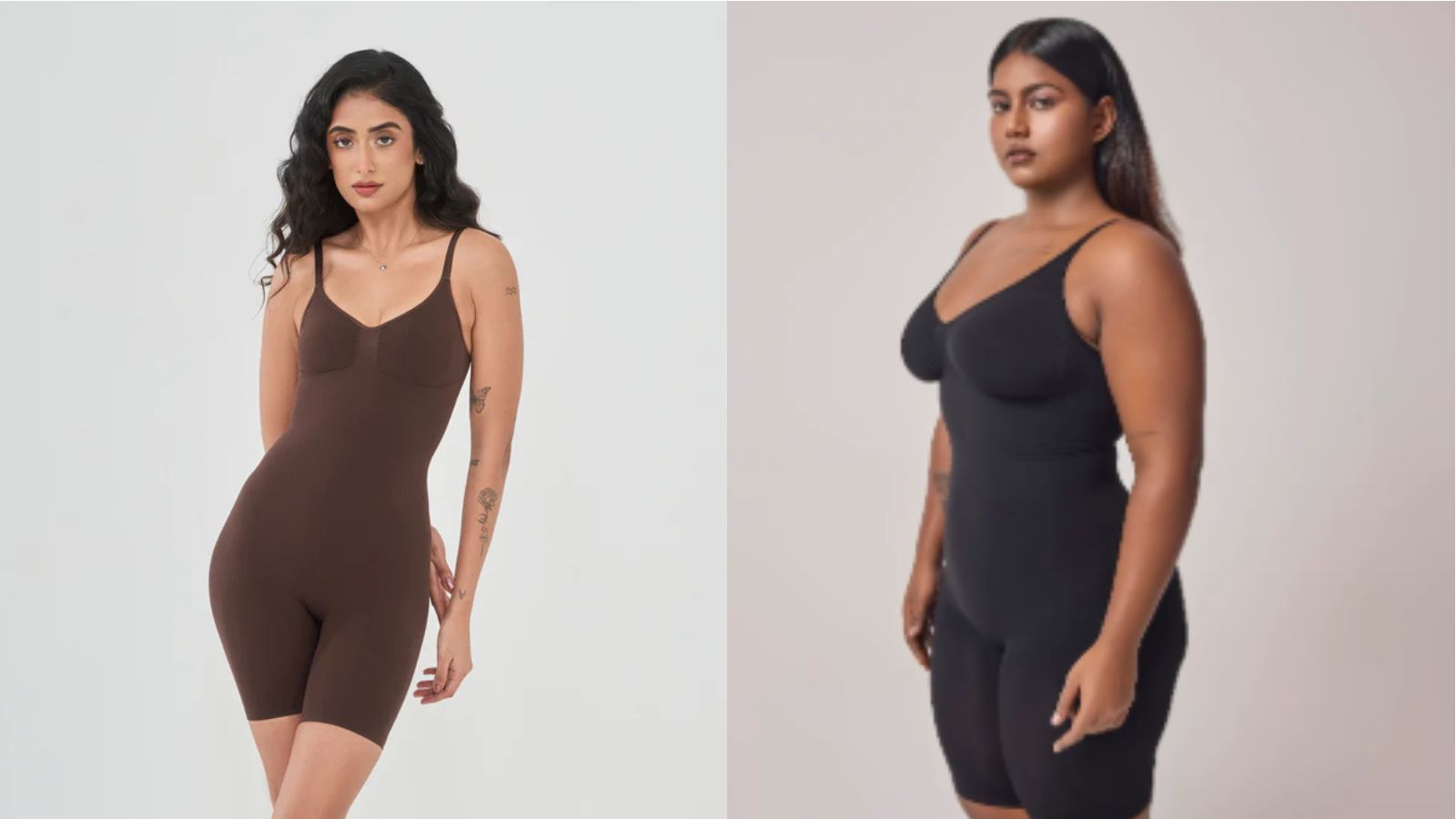
While the influence of Western giants like Kim Kardashian’s SKIMS and the sleek minimalism of K-Fashion has normalised the silhouette, the Indian climate and anatomy require a different set of rules. You cannot wear a thick, rubberised cincher in 40-degree humidity without consequences.
“Designs that work in the West don’t necessarily work for Indian women,” notes Saxena. The innovation here is thermal: creating high-compression fabrics that breathe in the heat. But the real “Desi” disruption is the Saree Shaper. By replacing the traditional cotton petticoat—which often added bulk where women didn’t want it—with seamless, mermaid-cut compression wear, brands have modernised the national dress for a generation that wants a “red-carpet” drape.
“The Indian consumer today wants natural refinement,” says Goyal. “The goal isn’t transformation; it’s polished comfort. Smoothing over compression. Support over squeeze.”
The Body Positivity Paradox: Choice vs. Pressure
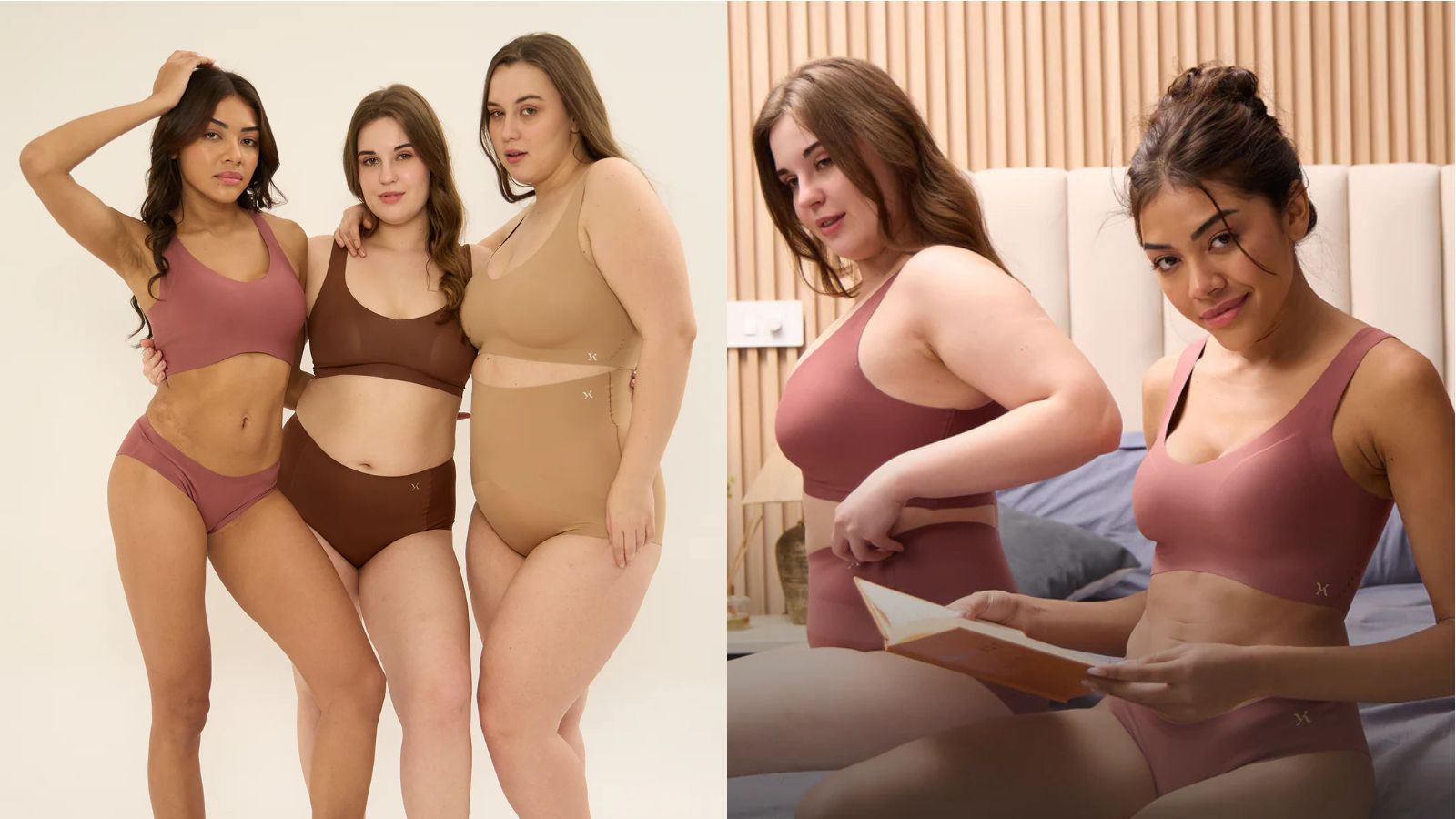
How does a brand sell “compression” in an era of “body neutrality”? It comes down to agency. The tension between loving your natural form and wanting to smooth it out for a silk slip dress is a modern tightrope walk.
“Body positivity and shapewear aren’t opposites,” argues Saxena. “The conflict only appears when compression is positioned as a requirement. For us, it’s a styling choice.”
Goyal agrees, noting that the “K-Effect” has moved the conversation away from corrective garments toward “Confidence Wear.” “We don’t position shapewear as a solution to ‘fix’ the body. The body isn’t the problem; the garment is the interface. When women feel comfortable, they feel confident and develop a softer outlook for themselves.”
Interestingly, the data proves this isn’t just about weight loss. Invogue reports that their highest-selling sizes are actually XS to M, proving that shapewear is now an “outfit-driven” purchase for all body types, rather than a “size-driven” necessity for a few.
The Future: Smart Fabrics And Beyond

Flatter thighs and stomachs? Check. Where do we go from here? As per experts, the industry is moving toward “Intelligent Compression.” A garment that understands pressure mapping—offering firm support at the lower back and tummy but softening at the ribs to allow for a full breath.
Goyal sees the future in “heat-adaptive shapewear” and true size inclusivity that isn’t just a marketing checkbox. “The most transformative shift will be garments that move with the body rather than fighting it,” he says.
As India emerges as a manufacturing powerhouse, the “Make in India” label on shapewear might soon be a global mark of quality. “Designing for Indian proportions forces brands to solve complexity,” Goyal adds. From breathable high-compression for tropical weather to engineering for ‘real’ waist-to-hip ratios, Indian innovations are ready to travel.
February 20, 2026, 17:58 IST










 Beauty & Skin
 Fashion & Accessories
 Gadgets for Her
 Hair Care
 Lifestyle & Wellness