
Blog
science for all newsletter an unimaginable mountain of plastic waste awaits the planet

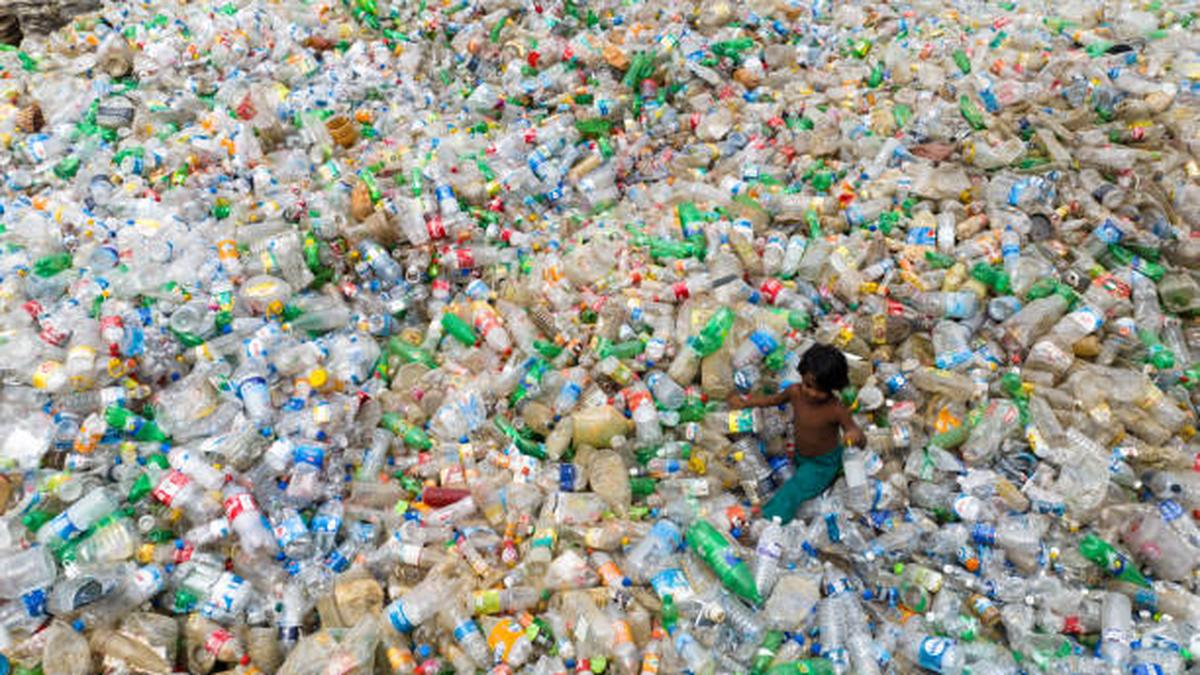
If the current trend in waste management continues, 12,000 million metric tonnes of plastic waste will litter landfills and the environment by 2050, scientists find.
| Photo Credit: Mostafijur Rahman Nasim
The Hindu’s weekly Science for All newsletter explains all things Science, without the jargon.
Plastic — that most indispensable and all-pervasive, indestructible and acutely polluting material — one of the definers of life in the Anthropocene, could become a mountain of a problem for the planet in 25 years. If the production and management of plastic (or synthetic organic polymers) continues as it does today, as much as 12,000 million metric tonnes of this non-biodegradable waste will inundate landfills and the natural environment by 2050, scientists said in a study published in Science.
This was for the first time that the “end-of-life fate” of plastic around the globe, which had ever been manufactured, had been calculated. The authors did so by collating data on production, use, and management of polymer resins, synthetic fibers and additives.
The researchers found that to date, some 8,300 million metric tonnes of new plastics had been produced, which in turn had generated (as of 2015) 6,300 million metric tonnes of plastic waste. Of this, only 9% had been recycled, 12% incinerated, and as much as 79% lingered in landfills or the environment. Being non-biodegradable, they lie in landfills and the natural environment almost permanently: all ocean basins contain plastic debris or microplastic, and pollution in freshwater systems and terrestrial habitats was increasing.
The history of plastic
The history of large-scale plastic production is very new, dating back to the 1950s, and it was only after WWII that the widespread use of plastics (outside of the military) took place. Plastic production had grown faster than any other manufactured material in the past 65 years, said the paper. And today, its largest market is packaging, ever since a shift took place from reusable to single-use containers, said the paper, adding that “Most of the packaging plastics leave use the same year they are produced.”
Plastics went from comprising 1% of municipal solid waste in 1960 to more than 10% in 2005 in developed countries. “At the same time, global solid waste generation, which is strongly correlated with gross national income per capita, has grown steadily over the past five decades,” said the paper.
The scientists analysed thermoplastics, thermosets, coatings, and sealants but focused on the most prevalent resins and fibres, whose global production increased from two million metric tonnes in 1950 to a whopping 380 million metric tonnes in 2015. The total amount of resins and fibers manufactured between 1950 and 2015 was 7,800 million metric tonnes. China accounts for 28% of global resin and 68% of global acrylic fiber production, the authors noted.
“The only way to permanently eliminate plastic waste is by destructive thermal treatment,” the authors said, adding that the near-permanent pollution of the natural environment is inevitable. The highest rate of recycling in 2014 were in Europe (30%) and China (25%); in the US plastic recycling had remained just 9% since 2012.
Needed: management
The paper enumerated “three different fates for plastic waste.” One, recycling, or reprocessing it into a secondary material, although it “delays, rather than avoids, final disposal.” Two, it can be destroyed thermally, through incineration, but this needs emission control technology. Three, it can be contained in sanitary landfills, or left uncontained in the natural environment.
Ironically, “the same properties that make plastics so versatile in innumerable applications — durability and resistance to degradation — make these materials difficult or impossible for nature to assimilate,” said the paper, calling for a well-designed management strategy.
From the Science Pages
Question Corner
Flora and Fauna
Published – March 02, 2026 07:37 pm IST





 Beauty & Skin
 Fashion & Accessories
 Gadgets for Her
 Hair Care
 Lifestyle & Wellness